

"If your actions inspire others to dream more, learn more, do more and become more, you are a leader."
Group Dynamics: The Potters Wheel
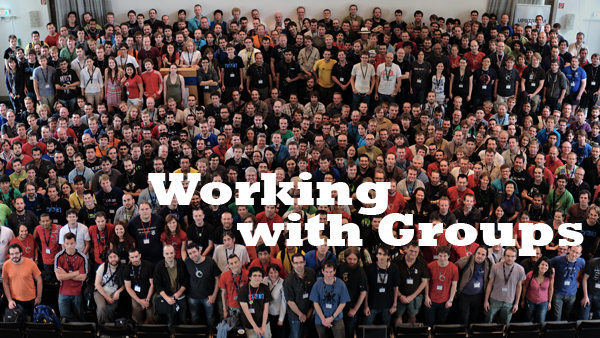
Hello Everyone! In this article, it is time to share a few thoughts and experiences about working with people in group settings. In the past few months, I have found myself working with a variety of groups and the analogy of pottery has crossed my mind. When working with groups you have a few basic elements... the people and dialog. To keep things from drying out, the potter uses water, but I have been throwing in a healthy dose of values from time to time... just to keep the conversation fresh and focused as together, we mold a new reality.
The groups mentioned in this article have been for-profit corporations or not-for-profit organizations. Each group has a different set of goals, but they share similar characteristics. Here is a list of things I have found that groups hold in common:
At this point, you may find yourself asking the question... "What does it mean to be flexible?" By this, I mean... have an agenda, but be willing to change it as the communication progresses. To illustrate this point, I recently was working with a group of people that did not know me. We started the conversations around values, but after the first meeting, it was obvious that something else was on their minds. When the second meeting started, I decided to take a more direct approach. We did an "Oil Change" on the overall state of the organization. An "Oil Change" is a very simple tool that asks two questions... "What is working?" and "What is not working?" By taking the concept of an Oil Change and applying it to the whole organization... people started to open up. Valuable feedback was gathered, recognized, and discussed in a group setting. Basically, many positive aspects and areas of opportunity were quickly identified. The change in agenda really allowed the communication to enter a new, more meaningful level.
If you are interested in increasing the performance of your group, organization, or business... you may find surprising results by engaging the groups you are tied to through a sense of values and straight shooting dialog.
Feel free to follow me here: @jeremyhouchens Also, if you would like to reach out, please leave a comment below or contact me anytime.
Thanks,
Jer
The groups mentioned in this article have been for-profit corporations or not-for-profit organizations. Each group has a different set of goals, but they share similar characteristics. Here is a list of things I have found that groups hold in common:
- There is a desire to increase the quality of communication.
- Greater alignment, or "We need to get on the same page."
- A need to flush out blind spots, (to uncover things not being talked about.)
- To build a sense of purpose and direction.
- Support, (either as individuals or as a group.)
The Situation
When working with a group of people in a company or an organization, it has been fascinating and energizing to try and evaluate the first key moments of interaction. For example, when the group knows you or has history with you, the group may be more friendly, accepting, and willing to engage. On the other hand... when starting with a group that has never met you before, the group demeanor can be very different. For example, there can be signs of skepticism and doubt. Body language may scream messages like... "Who is this joker? What the heck are we doing? Why are we doing this?"Cut to the Chase
The questions above are all valid. To get around these challenges, I have found a few tactics that have worked very well. First, be flexible and second, build a sense of values into the conversations.At this point, you may find yourself asking the question... "What does it mean to be flexible?" By this, I mean... have an agenda, but be willing to change it as the communication progresses. To illustrate this point, I recently was working with a group of people that did not know me. We started the conversations around values, but after the first meeting, it was obvious that something else was on their minds. When the second meeting started, I decided to take a more direct approach. We did an "Oil Change" on the overall state of the organization. An "Oil Change" is a very simple tool that asks two questions... "What is working?" and "What is not working?" By taking the concept of an Oil Change and applying it to the whole organization... people started to open up. Valuable feedback was gathered, recognized, and discussed in a group setting. Basically, many positive aspects and areas of opportunity were quickly identified. The change in agenda really allowed the communication to enter a new, more meaningful level.
In Closing
The important thing about working with groups is to remember the need to build a sense of accomplishment. People come together for a variety of reasons, but when they are called to a meeting, they are looking for a clear sense of direction. Their time is valuable and it is an investment in time when they come together as a group. If you enjoy working with groups, just remember to keep working the clay and adding water from time to time. Mix some values into the conversations and watch the group start to take shape.If you are interested in increasing the performance of your group, organization, or business... you may find surprising results by engaging the groups you are tied to through a sense of values and straight shooting dialog.
Feel free to follow me here: @jeremyhouchens Also, if you would like to reach out, please leave a comment below or contact me anytime.
Thanks,
Jer
Featured Blog Posts
Featured blog posts from BuildYourCulture.com
Solution Providers
Leadership Quotes
Featured Company
Here is a featured company from our collection of organizations that feature corporate culture.

Bank of America
It is refreshing to see a company with very clear and well-defined core values. If you are looking for a good example of shared corporate...
Culture Tweets!
-
 Nobody can match you Artblocks. @Sempiter3 @StevenKimbrough @gong_shihui @bodiemprice_1l @ErinOwen8788 @thenicoreth… https://t.co/apTh90v6tc3 years 1 month ago
 -
 Wow, this might be the coolest thing Ive seen all year. @imransays1 @BildYourCulture @tabito_tevez @smdh771… https://t.co/Grm1HYcc5O3 years 2 months ago
 -
I hope it doesnt sell out fast @emblixsolution @Crypto_flu3nc3r @BildYourCulture @MerkleTimeZ @XeloreDraco… https://t.co/WFutemlEUt3 years 4 months ago


Nonprofit Organizations

Teach for America is a nonprofit organization. The mission of the organization is to "enlist, develop, and mobilize as many as possible of our nation's...